Today, the 22nd of March, we mark one day after the sixty-sixth anniversary of one of the most consequential acts of state violence in modern history. That single act ushered in what was to become the most violent period in South Africa's history that lasted three decades until 1994, when the first non-racial and non-sexist democratic general elections were held. It was a loud shattering of the era of peaceful protests, and signalled to the liberation movement that that door was now finally forever closed.
What happened in Sharpeville on 21 March 1960 is not simply South African history. It is a permanent landmark in the global story of what happens when a state weaponises law, and then weaponises bullets, against the people who dare to say no. We memorialise it because we refuse to forget, not the tragedy that it was, but most importantly the role it played to usher in a new and more militant phase of the struggle that led us, together with the other pillars (internal mass mobilisation, international solidarity and underground), to our freedom.
Every act of inhuman brutality by the white minority regime was converted by the oppressed masses into an instrument of liberation. The oppressed humanised themselves in their suffering, and affirmed their humanity even as the regime sought to dehumanise them. The oppressed turned their pain and suffering into acts of courage.
Understanding Sharpeville requires that we go back further than the day itself. It requires us to understand the document, the hated dompas, and the men and women who refused to let its degradation go unanswered.
THE DOCUMENT THAT MADE YOU A CRIMINAL FOR EXISTING
The Natives (Abolition of Passes and Co-ordination of Documents) Act of 1952 is one of history's most cynically named pieces of legislation. Rather than abolishing anything, it consolidated and intensified the existing pass law regime into a single, comprehensive instrument of racial control. Every Black South African over the age of sixteen was required to carry a passbook (the dompas, a term meaning, in ordinary Afrikaans, "dumb pass") at all times, in all places.
But the dompas was only the surface of the system. Embedded within it, through Section 10 of the Natives (Urban Areas) Consolidation Act of 1945 as amended, was an even more granular architecture of control. Section 10 defined, with bureaucratic precision, who was permitted to exist in an urban area: the places where work and economic survival were concentrated. A Black person could live legally in a city only if they had been born there and resided there continuously since birth, had worked uninterruptedly for the same employer for at least ten years, or had lived lawfully in the area for at least fifteen years. Everyone who could not satisfy one of these conditions was classified, regardless of the reality of their lives, as a "temporary sojourner": permitted to remain in that urban area for no more than seventy-two hours without a permit.
This status, or its absence, was confirmed by a stamp in the passbook. The stamp was the mechanism. The absence of the stamp was the crime. No African might remain in an urban area for more than seventy-two hours unless the document confirmed they had earned the right to be there. Those who could not produce the qualifying endorsement were "endorsed out", the government's clinical euphemism for forced removal to the designated homelands, a fiction of geography designed to make Black South Africans permanent foreigners in the country of their birth.
The dompas was therefore not merely an identity document. It was a revocable permit for a person's own life. Forget the document, fail to update the correct entry, or step beyond an authorised area, and you could be arrested on the spot, fined, imprisoned, or removed hundreds of kilometres from your family and your livelihood.
It affirmed the mindset existing among the high priests and advocates of white minority rule that black people were not a part of South Africa, but residents of the bantustans and reserves; that only white people were South African and the majority black population were just "temporary so-journers", there to service the interests of the white minority and to return to the bantustans and reserves as soon as they were done with their service.
Under Prime Minister Hendrik Verwoerd, the Nationalist government extended the pass requirements to Black women in 1959: having previously enforced them primarily against men. It was a miscalculation that produced precisely the political surge the regime most feared.
THE LIBERATION MOVEMENT CONFRONTS THE DOMPAS
By late 1959, both of South Africa's major Black liberation organisations had concluded that the pass system had to be the next front in the struggle. At the ANC's annual conference in Durban in December 1959, President-General Chief Albert Luthuli declared 1960 the "Year of the Pass" and announced a nationwide anti-pass campaign planned for 31 March 1960: the anniversary of the historic 1919 anti-pass actions.
A week later, the Pan Africanist Congress, founded in April 1959 after an Africanist breakaway from the ANC, announced a parallel campaign. Both organisations had arrived at the same conclusion about the pass laws. They arrived at their campaigns by different routes and with different political philosophies. But on the question of the dompas, the liberation movement's two main formations spoke with one voice.
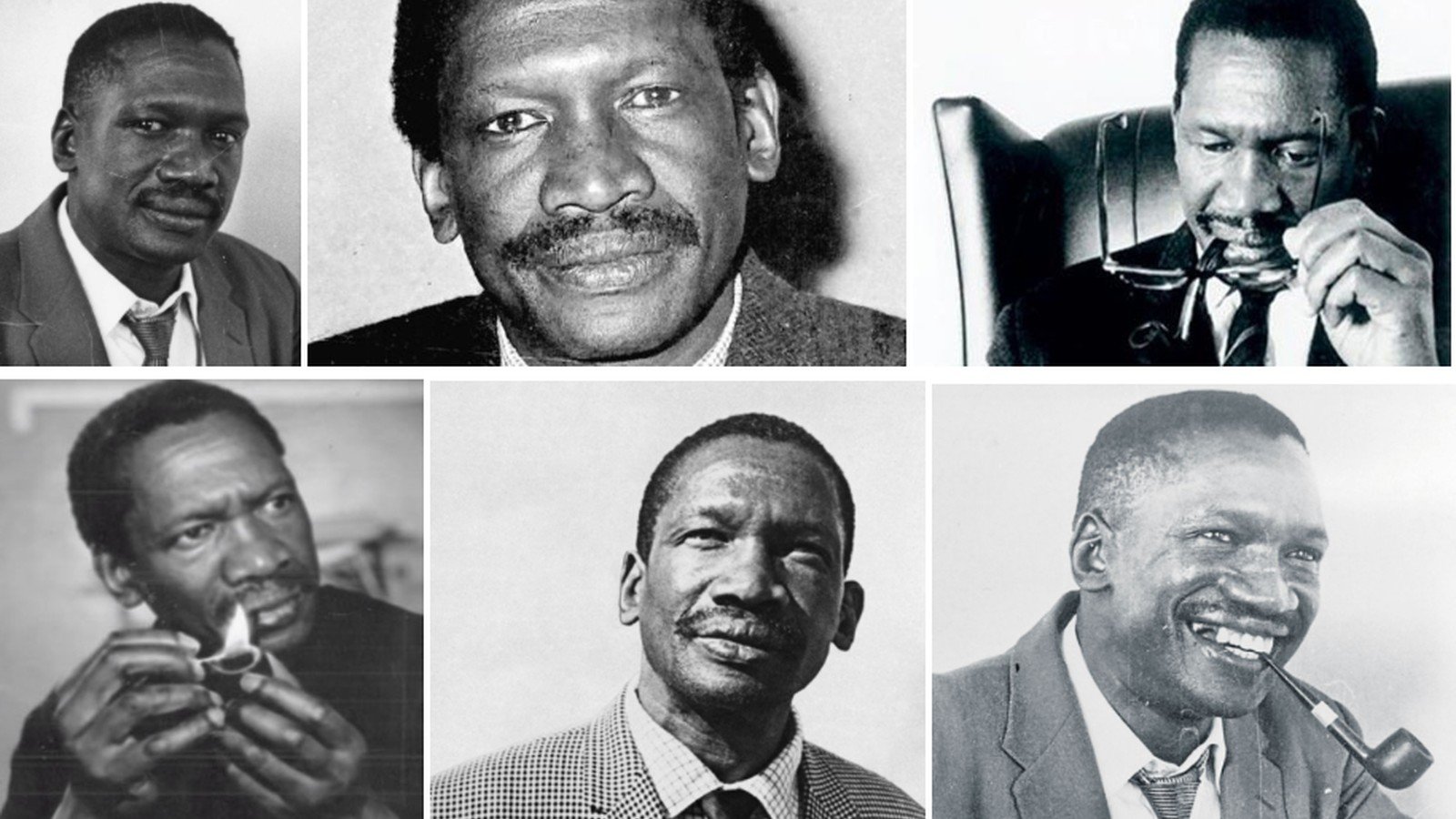
Robert Mangaliso Sobukwe, a lecturer at the University of the Witwatersrand, an orator of extraordinary power, and the PAC's founding president: resolved to move before the ANC's chosen date. His method was chosen with deliberate moral precision: not riots, not sabotage, not any action that could be characterised as disorder. He asked Black people across South Africa to leave their passbooks at home on 21 March 1960, present themselves peacefully at a police station, and demand to be arrested. The act was civil disobedience in its purest form: an invitation to the state to criminalise its own citizens for the world to see.
On 16 March 1960, five days before the campaign, Sobukwe wrote directly to the Commissioner of Police, Major-General Rademeyer, to inform him of the PAC's intentions. The protest would be "non-violent, disciplined, and sustained." He signed it. He gave his name. He wanted no ambiguity.
On the morning of 21 March, Sobukwe rose before dawn, ate breakfast with his wife Veronica, and walked with a group of companions from his home in Mofolo towards the Orlando police station in Soweto. He was arrested there, as he had intended to be. Robert Sobukwe was never in Sharpeville that day. He was in Soweto, fifty kilometres away, doing exactly what he had asked others across the country to do: leading from the front. What none of them knew that morning was that further south, events of an entirely different and irreversible character were already in motion.
THE DAY WAS NEVER ONLY SHARPEVILLE
The protests of 21 March 1960 were national in their design and geography. In Pretoria, a group presented themselves at the Hercules police station. In Durban and East London, PAC activists offered themselves for arrest. In Cape Town's Langa township, Philip Ata Kgosana, a young UCT student and PAC member, led a march as part of the same campaign. When news of the Sharpeville massacre reached Cape Town later that afternoon, police charged a gathering crowd with batons, tear gas, and live ammunition. Three people were killed at Langa on the same day. Twenty-six were wounded.
The name Sharpeville endures because Sharpeville is where the scale and the deliberateness of the state's violence became impossible to conceal.
Approximately five thousand people had gathered that morning at the Sharpeville police station: singing, chanting, gathered in orderly defiance. The atmosphere, by most recorded accounts, was initially peaceful. PAC slogans rang through the air: Izwe lethu — "Our land." Awaphele amapasti — "Down with passes." Sobukwe Sikhokhele — "Lead us, Sobukwe."
By early afternoon, around three hundred police officers, some positioned atop British-made Saracen armoured vehicles, had assembled in response. At approximately 1:30 in the afternoon, without issuing any warning to the crowd, officers opened fire.
They discharged 1,344 rounds, the state's own count, in approximately two minutes.
THE NUMBERS THE STATE CHOSE TO COUNT
The official record produced by the apartheid police states that 69 people were killed and approximately 180 were seriously wounded. Among the dead were women and children. A substantial number of victims were shot in the back: the physical evidence of people who had turned and run.
The figure of 69 has been contested ever since. The crowd numbered in the thousands. The rounds fired numbered in the thousands. The dead recorded by a state that had both the motive and the capacity to minimise the count were sixty-nine.
The Truth and Reconciliation Commission addressed this when it reported in 1998. Its investigators found that the evidence revealed "a degree of deliberation in the decision to open fire at Sharpeville," indicating the shooting was more than frightened officers losing their nerve. This was not a panic. This was a decision.
The number 69 is the number the apartheid government recorded. The TRC offered grounds to treat it as a floor, not a ceiling. The dead who succumbed to their wounds in the days that followed — those whose deaths were directly attributable to the shooting but not counted in the immediate toll, were not systematically included in the official record.
What we know with certainty: sixty-nine is a minimum. The deliberateness of the state's action makes the precision of any single figure a category error.
REPRESSION, BANNING, AND THE SOBUKWE CLAUSE
The government's response to the massacre was not to reckon with what it had done. It was to accelerate.
The pass laws were temporarily suspended in the final days of March 1960, not from remorse, but because the country's jails could no longer absorb the volume of those presenting themselves for arrest. By 6 April, enforcement had resumed.
On 30 March, the government declared a state of emergency. More than eighteen thousand people were detained, including Nelson Mandela and leading figures across the anti-apartheid movement. On 8 April 1960, both the ANC and the PAC were banned under the Unlawful Organizations Act: banned together, on the same day, for the same offence of daring to organise for freedom. Membership of either organisation became a criminal act. Chief Luthuli had called on Africans to observe 28 March as a day of mourning and publicly burned his own pass. Both organisations, different in philosophy, were united in their defiance and united in the state's retribution.
For Robert Sobukwe, the repression was personal and specifically engineered. He was sentenced to three years in prison in May 1960. As his sentence neared completion in 1963, the apartheid government passed what came to be known as the "Sobukwe Clause", Article 4 of the General Law Amendment Act, which authorised the Minister of Justice to extend the detention of any political prisoner indefinitely and without trial. The clause was invoked precisely once: against Sobukwe.
He was transferred to Robben Island and held in conditions deliberately designed to prevent his ideas from reaching other prisoners: completely isolated, forbidden from communicating with Mandela, Sisulu, or any fellow inmates. The apartheid state had concluded that his intellect, in contact with others, was too dangerous to allow.
He was released in 1969, but placed under house arrest in Kimberley, under banning orders that prohibited him from speaking publicly or leaving the town. He practised law under these conditions. He continued, quietly, to inspire a generation of activists. Steve Biko, whose Black Consciousness Movement owed a significant philosophical debt to Sobukwe's thought on African self-determination, was among those who maintained contact with him during his years of restriction.
The government refused him appropriate medical care when lung cancer was diagnosed. He died on 27 February 1978: twenty-two days before the anniversary we mark now, forty-eight years ago this past week. He had spent the final eighteen years of his life either imprisoned or under banning orders. He never saw the country he had worked to liberate set free.
During his Oration at the funeral of South Africa's first Minister of Foreign Affairs, Comrade Alfred Nzo, long time Secretary General of the ANC, President Thabo Mbeki was to say,
"The days pass, each year giving birth to its successor. What has passed becomes the past as time erodes the memory of what was living experience. In their recalling, old joys expand into enlarged pleasure. Old wounds fade away into forgotten scars or linger on as a quiet pain without a minder. Those who gave generously of their talents to lighten our moments of darkness, do not want the embarrassment of the enthusiasm of our gratitude. Those who brought us intolerable pain and took away our days of light insist that nothing should be recalled, lest we impose on them the pain of guilt and on ourselves the pain of our memories. And so what was slides away as though it never was. The kaffirs and the Bantus and the Europeans, the pass laws and the group areas, the surplus people huddled together in the cold and desolate veld - all has passed, as though it never was. The haunting tragedy of human beasts of burden, who worked on the soil and in the bowels of the earth, merely as factors of production, with fewer rights than the machines by their side -that too has passed as though it never was. The early morning knock of the police, the solitary confinement, the torture and death in the police cells - all has passed as though it never was. The stories that were told, which transformed patriots into mindless, blood-thirsty terrorists at the service of ungodly foreign powers, and the long days and nights in prison and in exile - all lingers on only as a nightmarish image of what might have been. The death at Bulhoek, at Alexandra, in New Brighton, at Sharpeville, in Soweto, at Sebokeng and in Shobashobane - they too become part of an imagined tragedy that never was".
THE WORLD'S RECKONING — AND SOUTH AFRICA'S ISOLATION
The international response to Sharpeville was swift and, for the first time in relation to apartheid, officially consequential. On 1 April 1960, the United Nations Security Council passed Resolution 134, condemning the killings and calling on the South African government to abandon apartheid. It was the first time the United Nations had formally discussed the apartheid system. A month later, the General Assembly declared apartheid a violation of the UN Charter.
The Sharpeville massacre accelerated South Africa's estrangement from the international community. The country left the Commonwealth of Nations in 1961. Investment outflows gathered pace. The moral architecture of global opposition to apartheid, which would take decades to reach its full effect, was consolidated at Sharpeville.
In 1966, the United Nations General Assembly formally declared 21 March the International Day for the Elimination of Racial Discrimination, a designation that carries, in its foundation, the blood of those who died in Sharpeville, Langa, and every other point of resistance on that day.
WHAT THE STATE DID NOT GIVE THEM: FREEDOM
Here is the historical truth that commemoration must not obscure: the pass laws were not abolished because of the Sharpeville massacre. They were temporarily suspended in the chaos of March 1960. They were then reinstated within a fortnight. They remained enforceable instruments of racial control for another twenty-six years, until the formal abolition of influx control legislation in 1986.
The sixty-nine who were killed on 21 March 1960 did not live to see the law they died resisting abolished. Most of those who survived them did not either.
This is the contested ground of Human Rights Day. Not the triumphalist narrative of sacrifice rewarded, but the longer, more difficult truth: that rights are not granted by the act of dying for them. They are built (slowly, painfully, against determined opposition) by those who survive, who organise, who refuse the comfort of surrender.
THE CONSTITUTION WAS SIGNED HERE
On 10 December 1996, Nelson Mandela chose to sign South Africa's new Constitution, one of the most progressive in the world, at the Sharpeville Human Rights Precinct. The choice was not incidental. Every right the Constitution enshrines carries in its foundations the weight of all who stood at that police station and were answered with bullets.
What distinguishes the South African Constitution is not just that it exists, or that it finally conferred on the black majority their South African citizenship long denied by colonial and apartheid regimes; but it is that it conferred on all the people of South Africa social and economic rights – the right to education, health, to employment, to life and so on. This is the ultimate negation of apartheid-colonialism.
But, the South African Constitution is also an unfinished journey. It sets goals and standards for us as a people that we should permanently strive towards, aware that each progress we make towards fulfilling it constitutes yet new milestones which we should still pursue. We are all dutybound to protect and advance each other's rights, each one of us aware of and alive to our shared responsibility to keep expanding the frontiers of our and others' rights and freedoms.
At the same time, Sharpeville is a reminder not just of fighting for rights, but of the responsibility to fight relentlessly for one another's rights, progress and freedoms. Every right – to speak, criticise, disagree, work, study, worship, identify, etc. – goes hand-in-glove with the responsibility not to undermine those of others, but always to advance and expand those of the others.
The democratic South Africa is still a new nation, just over 30 years old, and we still have not even achieved much of what our Constitution calls us upon to.
Sitting on the inaugural bench of the Constitutional Court that gave life to that document was Justice Yvonne Mokgoro, the first Black woman ever to be appointed a judge in South Africa, and one of only two women among the Court's eleven founding justices when President Mandela appointed them in October 1994. Born in Galeshewe township, Kimberley, she had come to the law through the struggle itself — nudged into it, in her own telling, by Sobukwe himself, who represented her after an apartheid-era arrest and told her simply that there was no law precluding women from the profession, and shaped by the same machinery that had turned ordinary South Africans into criminals for existing in the wrong place without the correct stamp.
Her landmark judgment in S v Makwanyane — which outlawed the death penalty and secured the concept of ubuntu at the heart of South African jurisprudence, stands as a direct answer to what Sharpeville represented. Where the apartheid state had reduced Black people to permit-holders whose right to exist required bureaucratic endorsement, Mokgoro's judgment placed human dignity, indivisible and non-negotiable, at the foundation of the law. She served a full fifteen-year term. She died on 9 May 2024, having spent her life building, from inside the institutions of democracy, what the generation of Sharpeville fought to make possible. She was seventy-three.
South Africa marks 21 March as Human Rights Day. The world marks it as the International Day for the Elimination of Racial Discrimination. Both commemorations are demands, not simply remembrances: demands that the distance between the law as written and the law as lived continues to narrow.
The sixty-six years between Sharpeville and today are not a story of linear progress. They are a story of a people who refused, generation after generation, to let the sacrifice be in vain: in the streets, in the courts, and in the constitution that now bears their names in its silences.
The reckoning is still unfinished. Human Rights Day is not a celebration of a destination reached. It is a summons to the work that remains.
“The future is not an accident.”
Dr Malusi Gigaba is a Scholar-Statesman, an ANC NEC Member, a former Cabinet Minister of the Republic of South Africa, a Member of Parliament, and a member of both the Joint Standing Committee on Defence and the Portfolio Committee on Trade, Industry and Competition.